Case 03 / Concept, fintech and AI
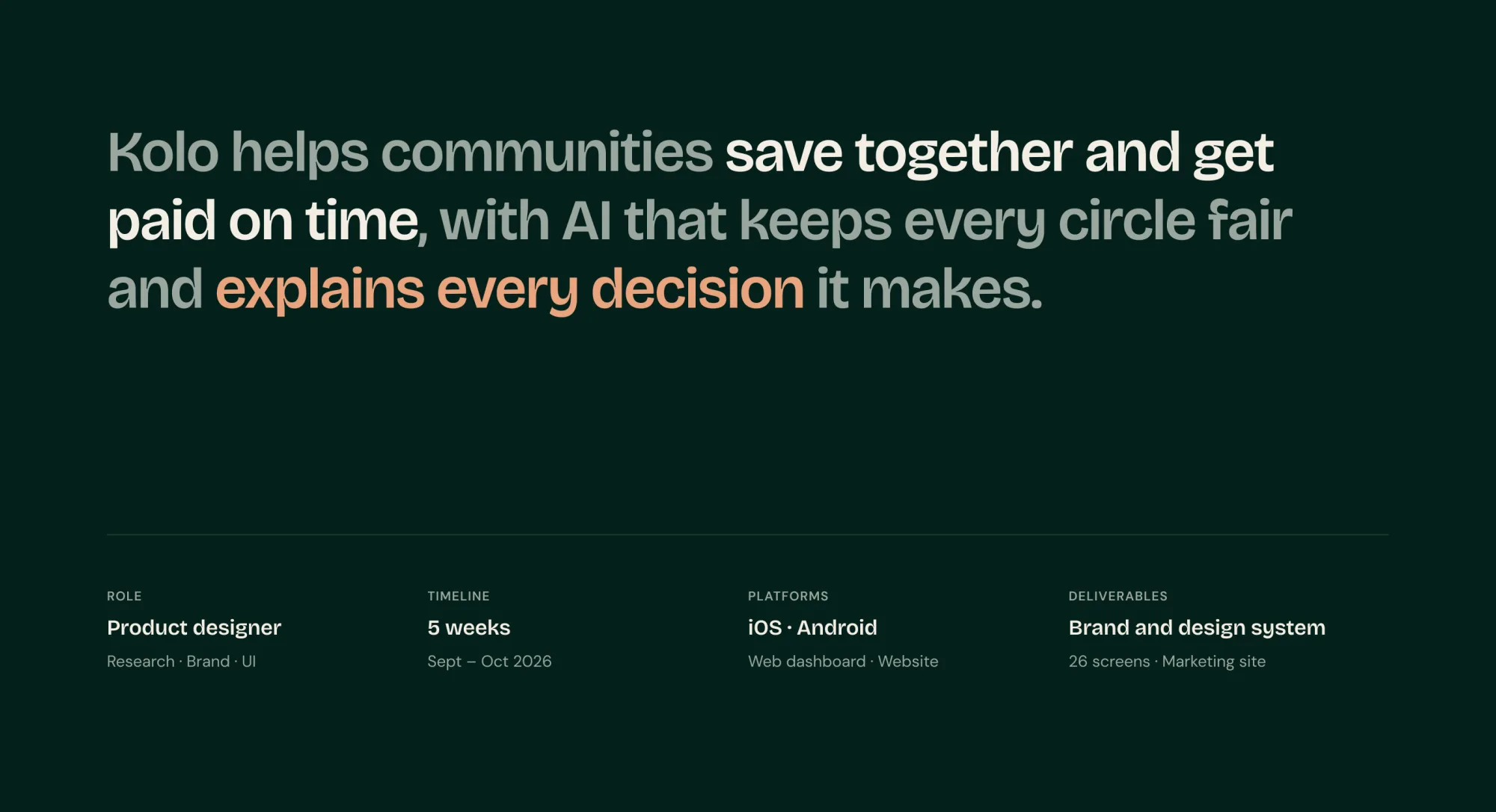
Kolo
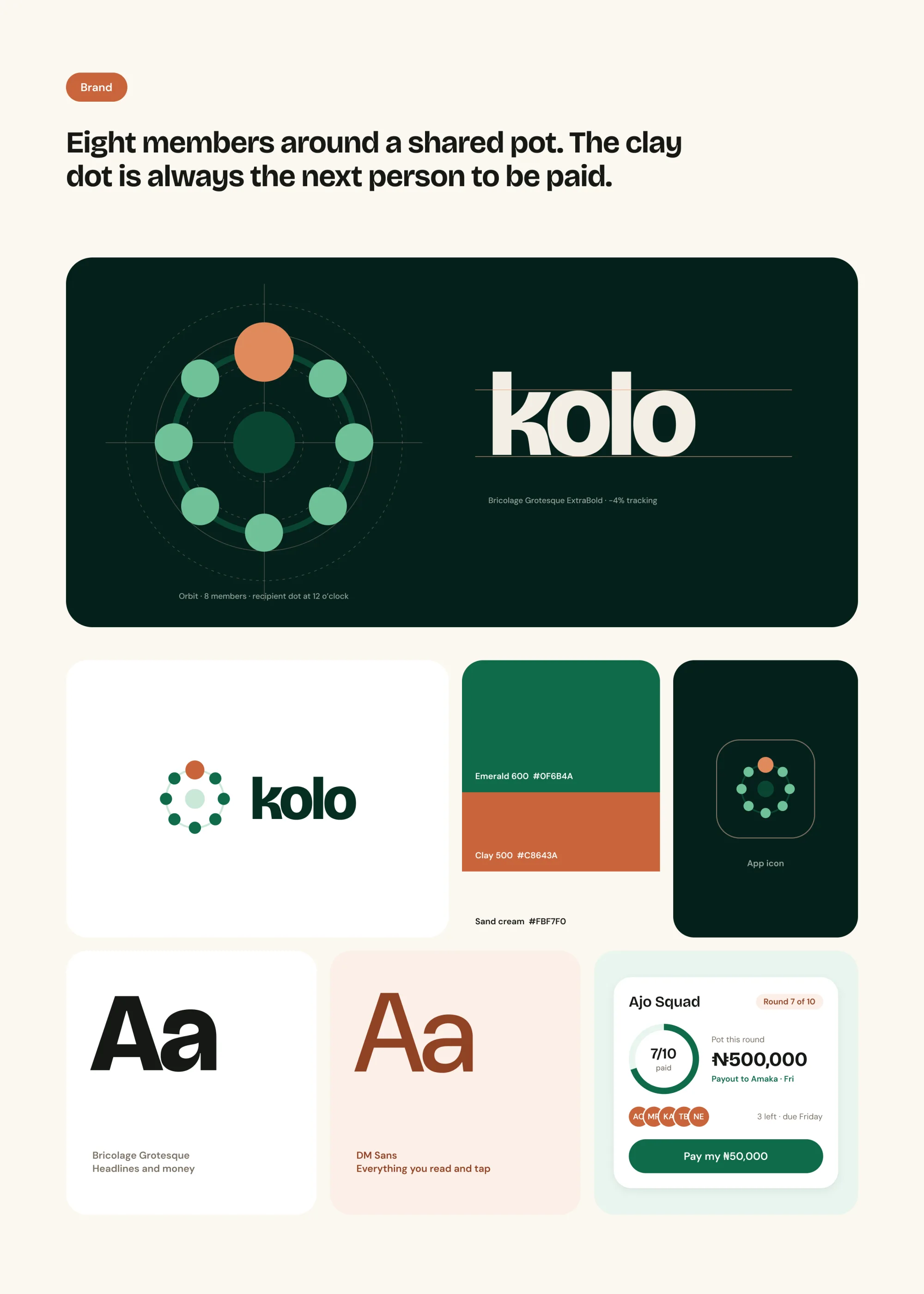
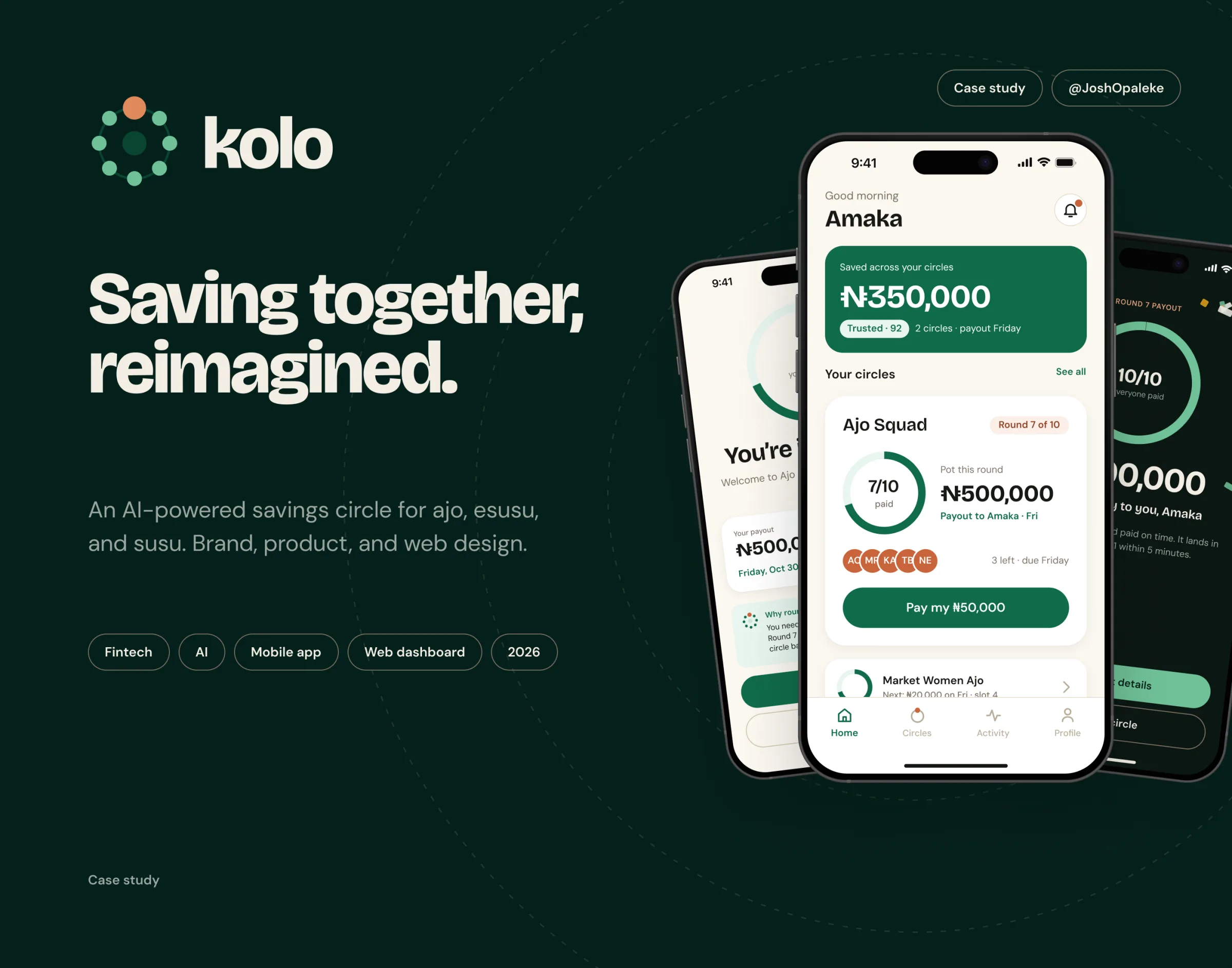
An AI-powered savings circle for ajo, esusu and susu, where every decision the AI makes comes with its reason.
- Year
- 2026
- Timeframe
- 5 weeks
- Role
- Product designer: research, brand and UI
- Tools
- Figma, Illustrator, Claude, After Effects
The 30-second version
01 Problem
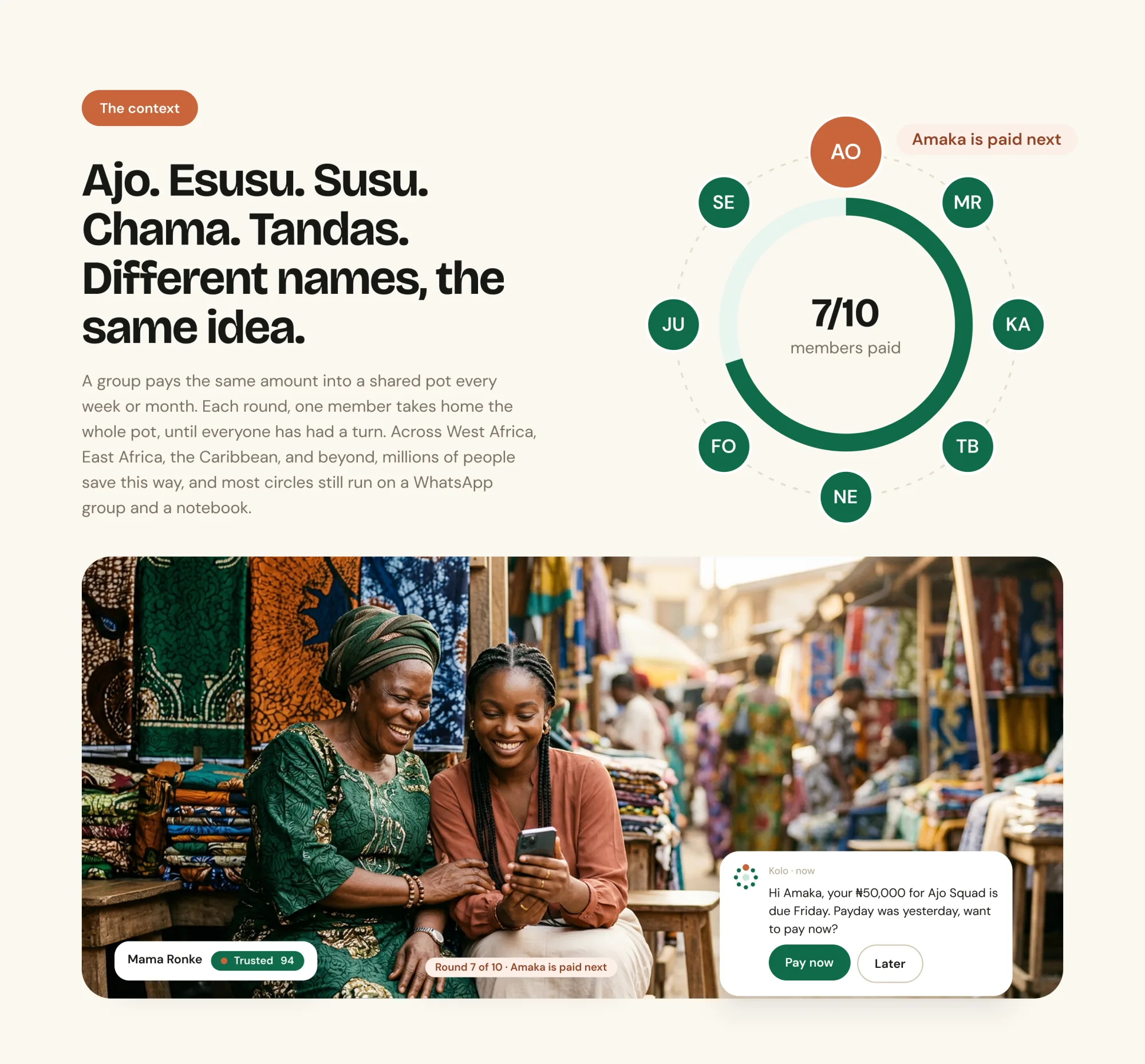
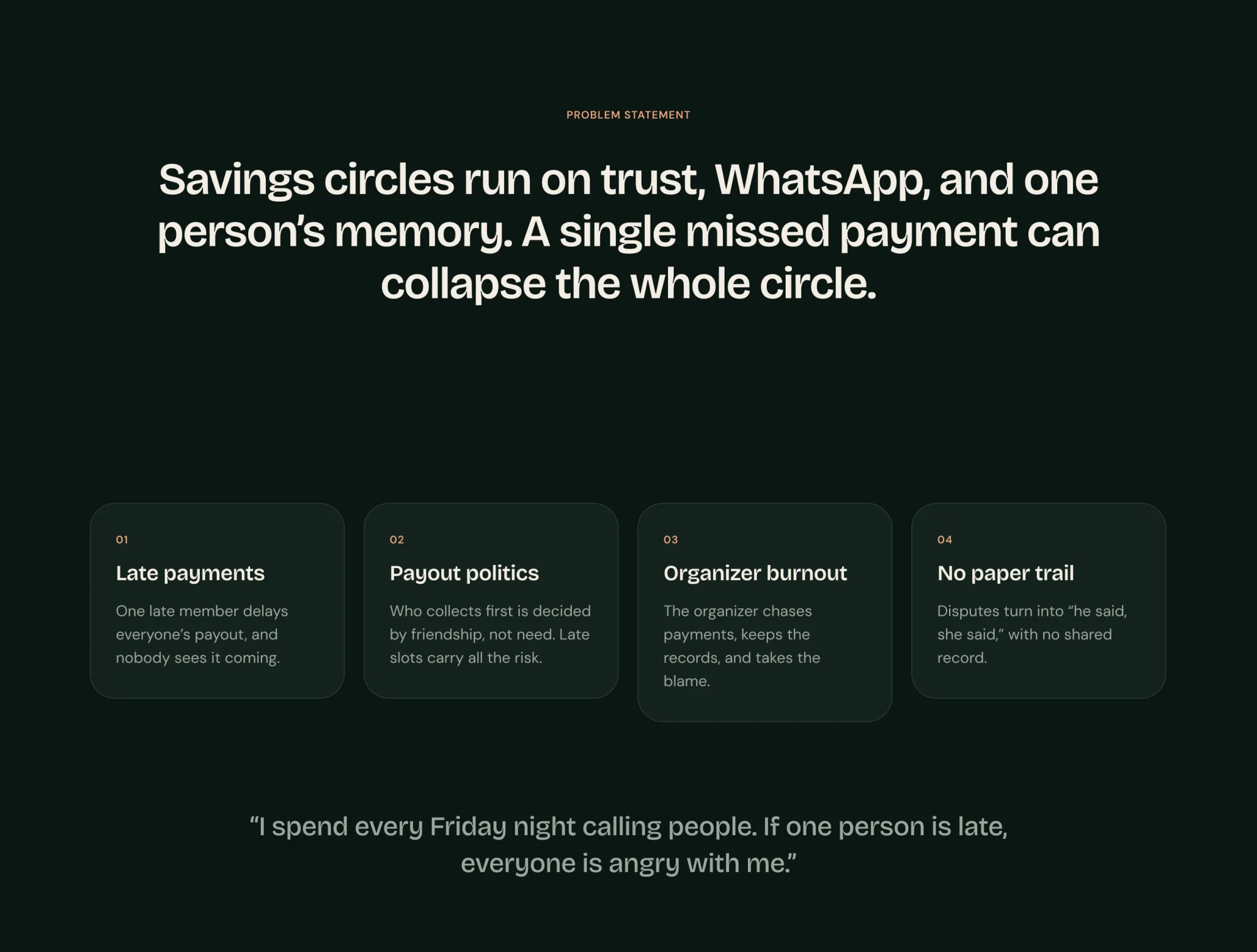
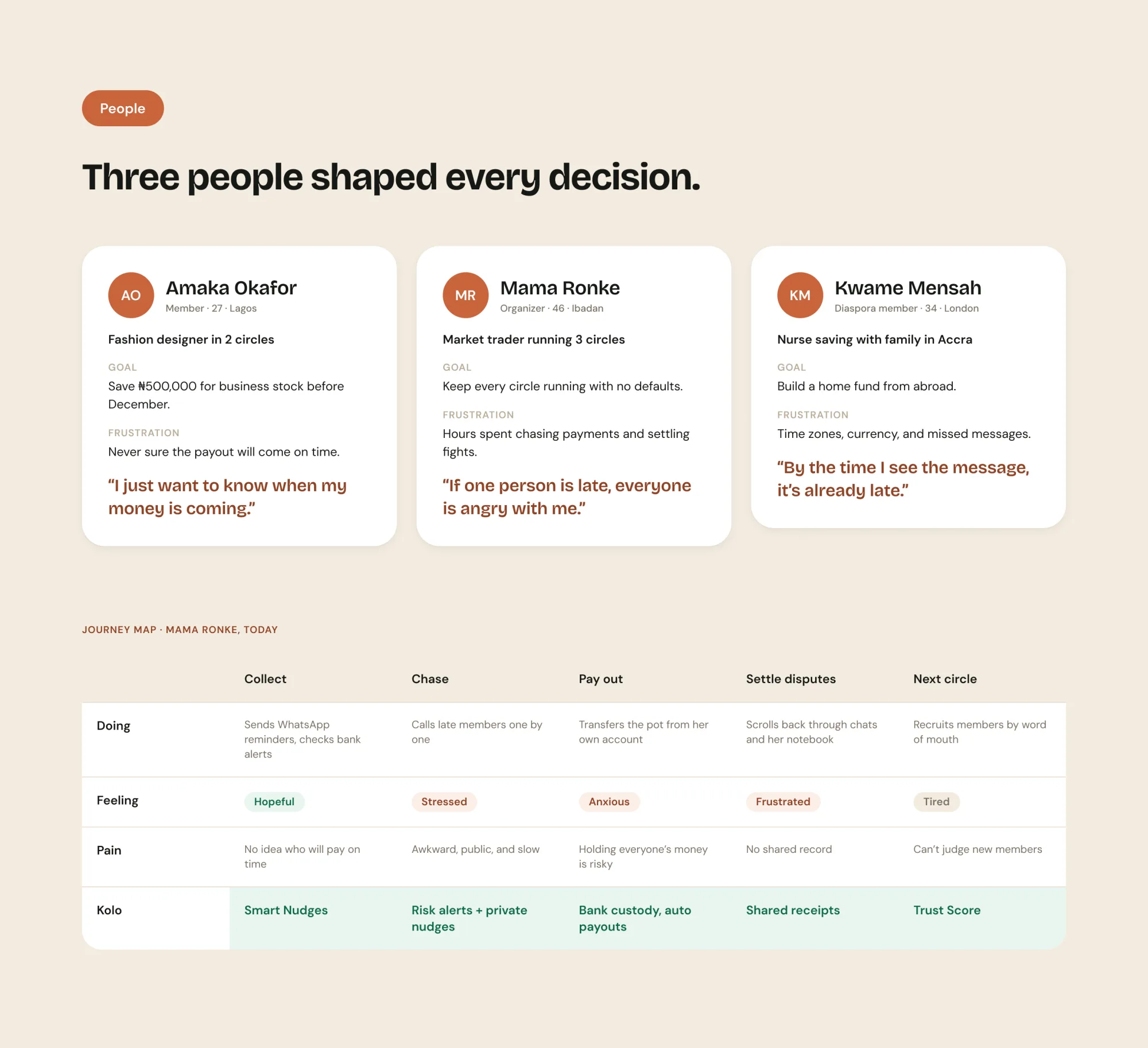
Savings circles run on trust, WhatsApp and one person's memory. One late payment delays everyone's payout, the payout order is decided by friendship, and the organizer chases payments, keeps the records and takes the blame.
02 What I did
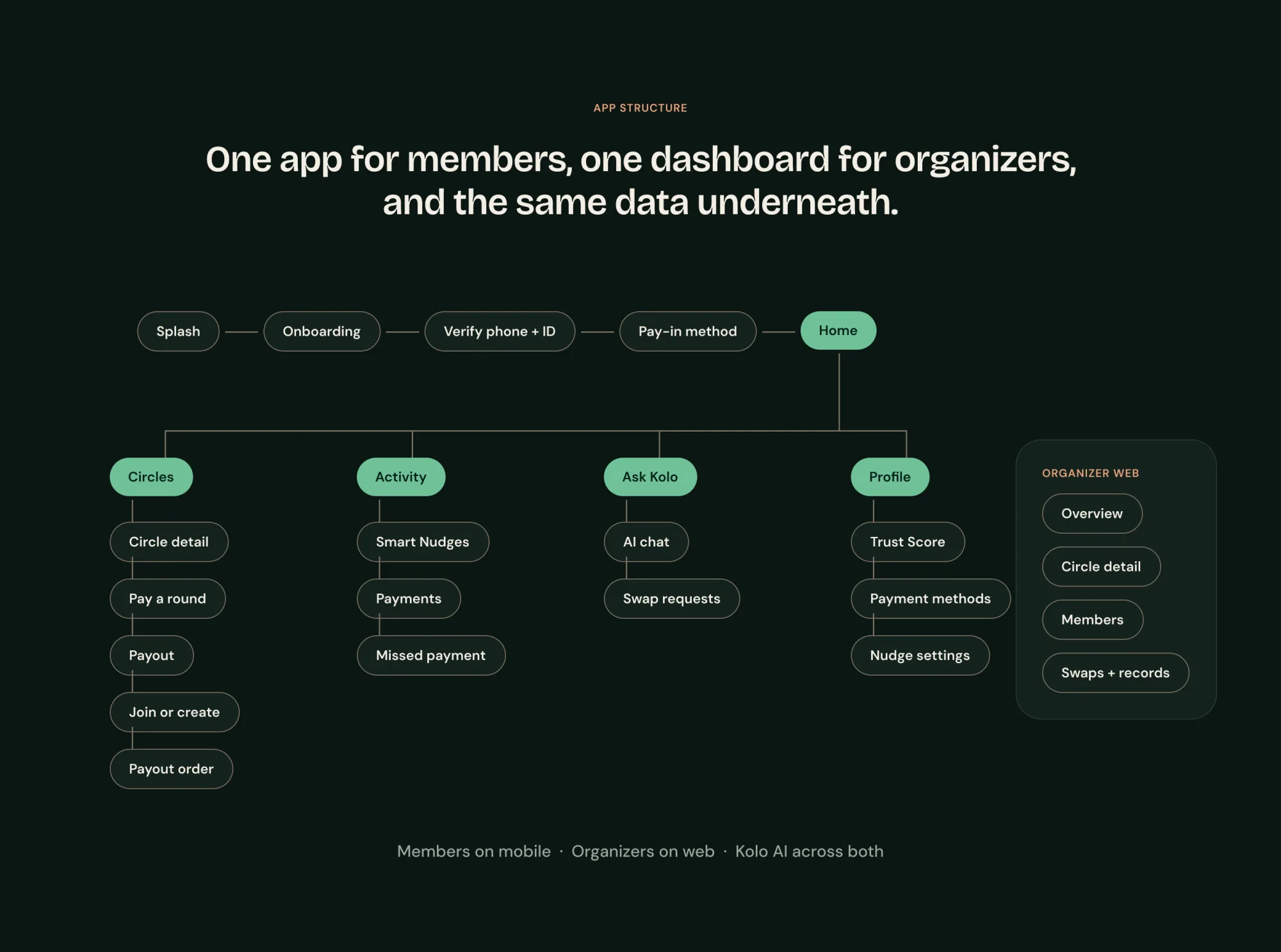
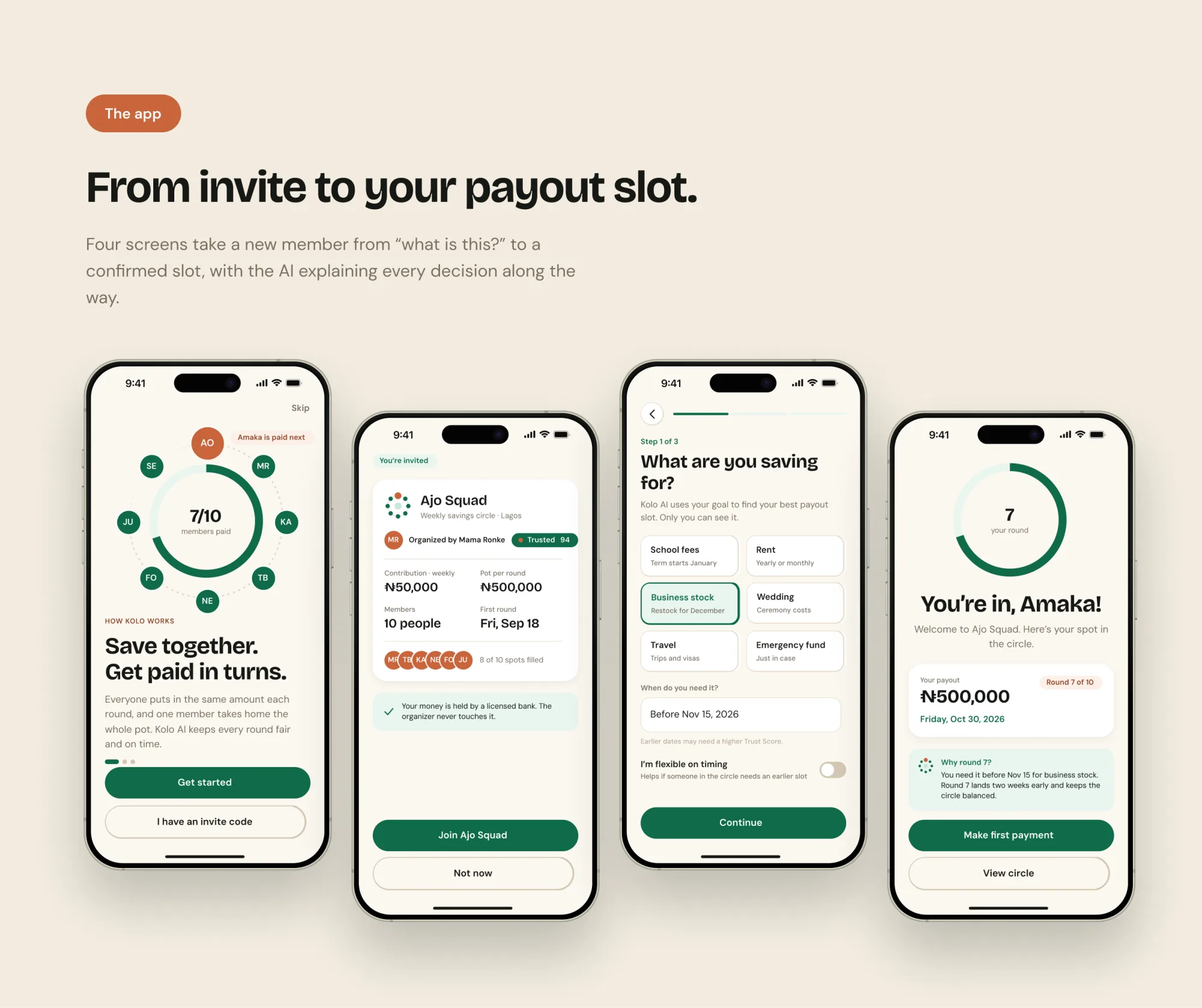
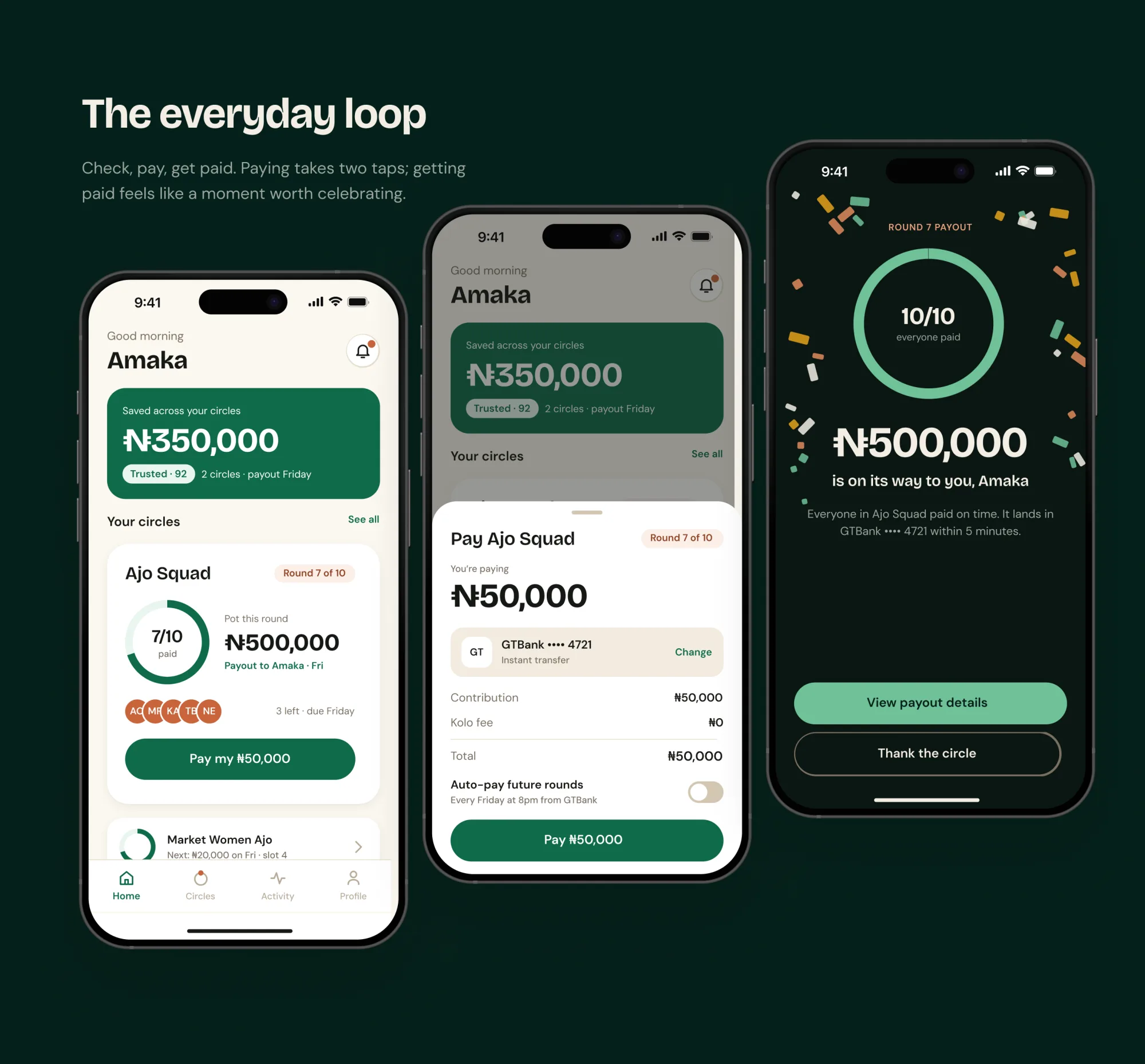
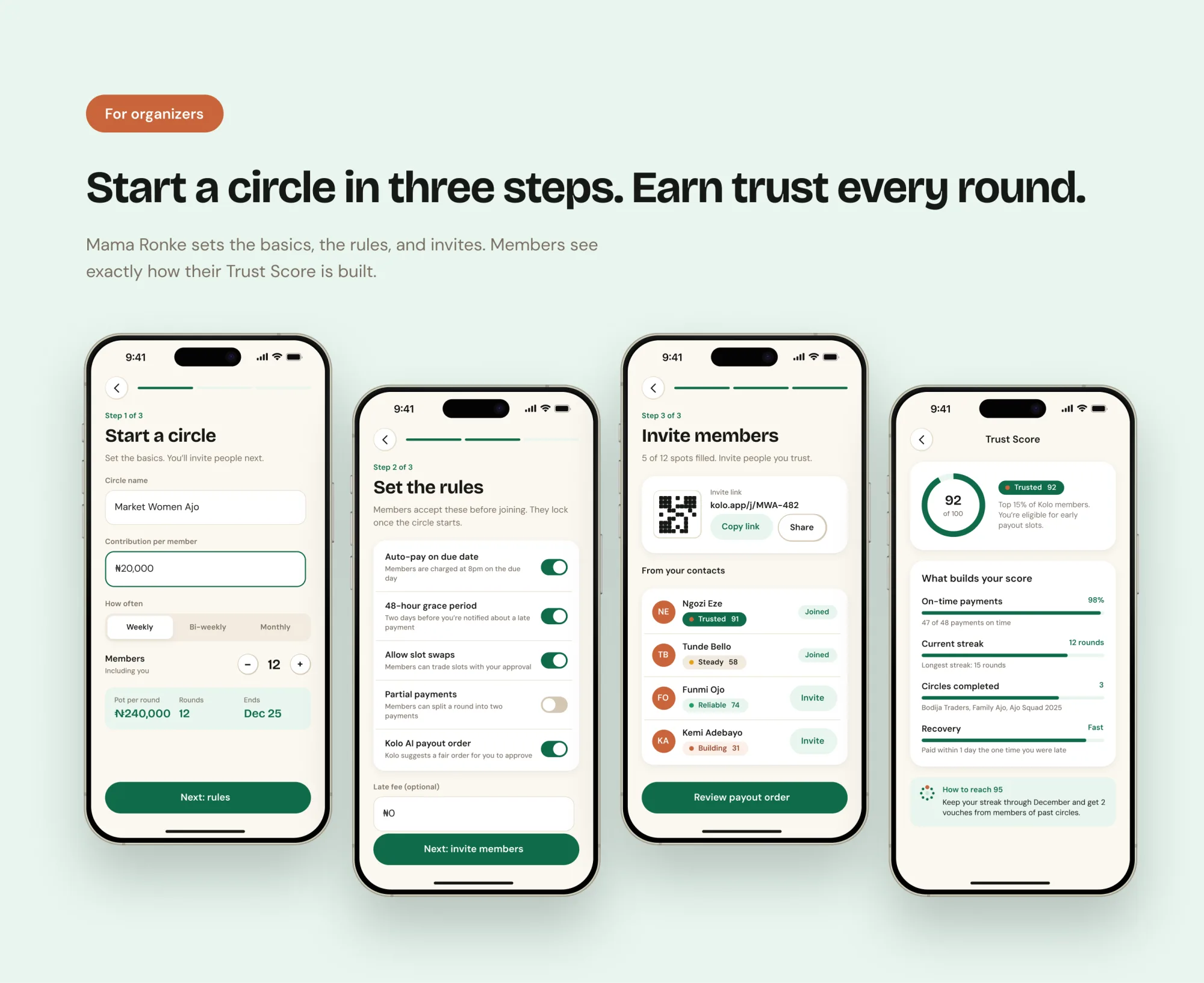
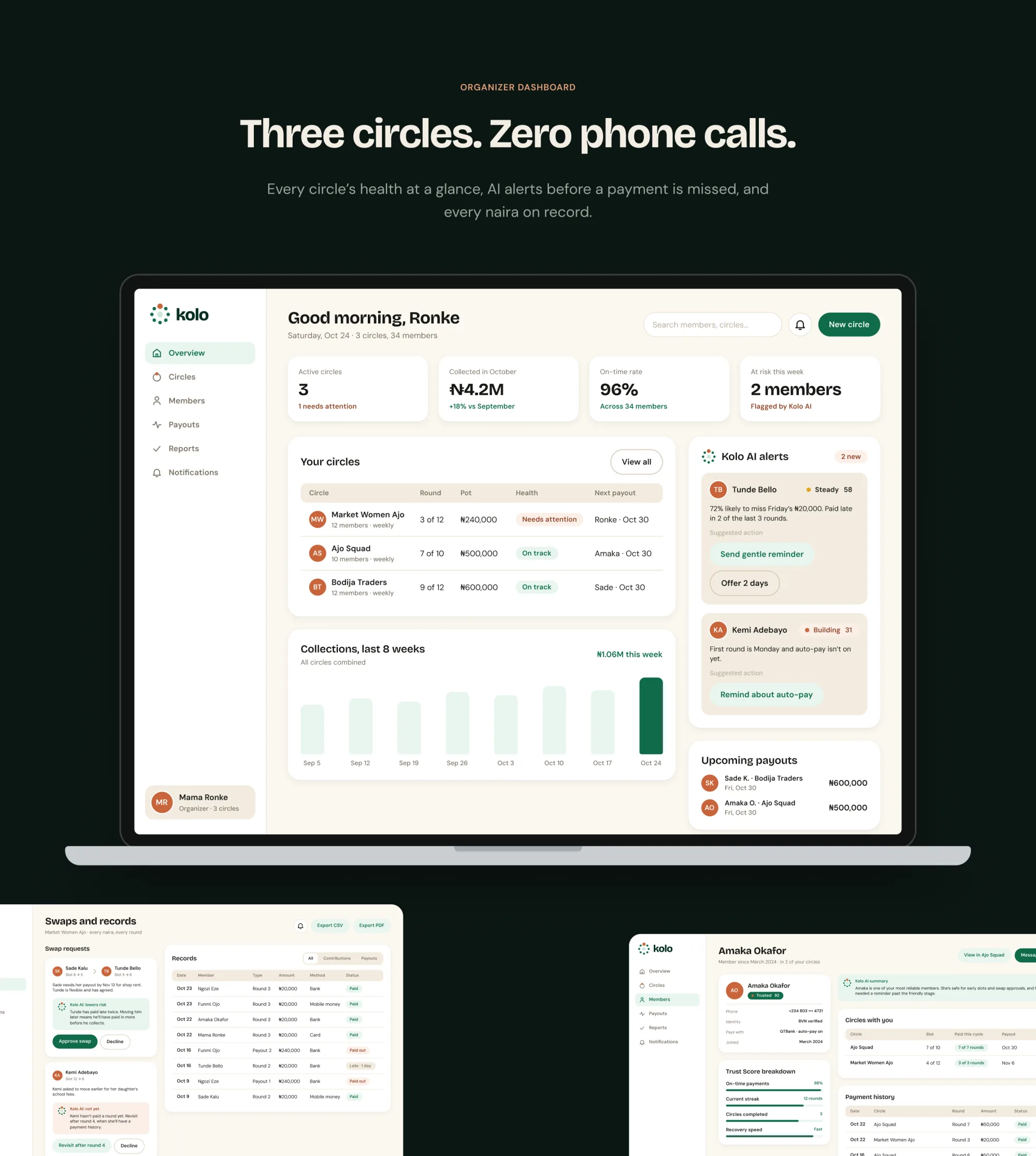
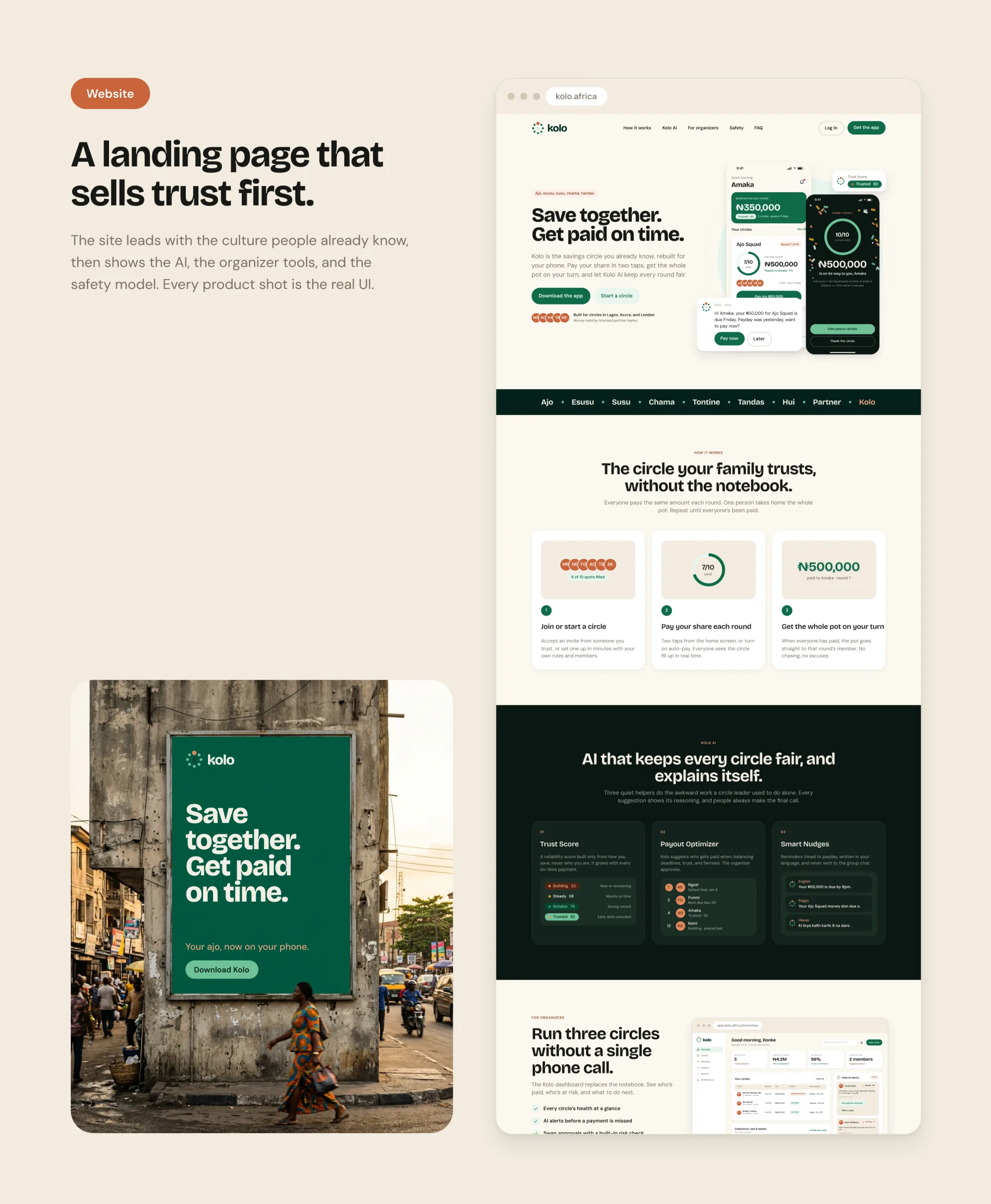
I mapped how circles run today and where they break, then designed the brand, a 26-screen iOS and Android app, a web dashboard for organizers and a marketing site. Three AI features take on the awkward work under one rule: the AI advises, people decide, and every output answers "why?"
03 Outcome
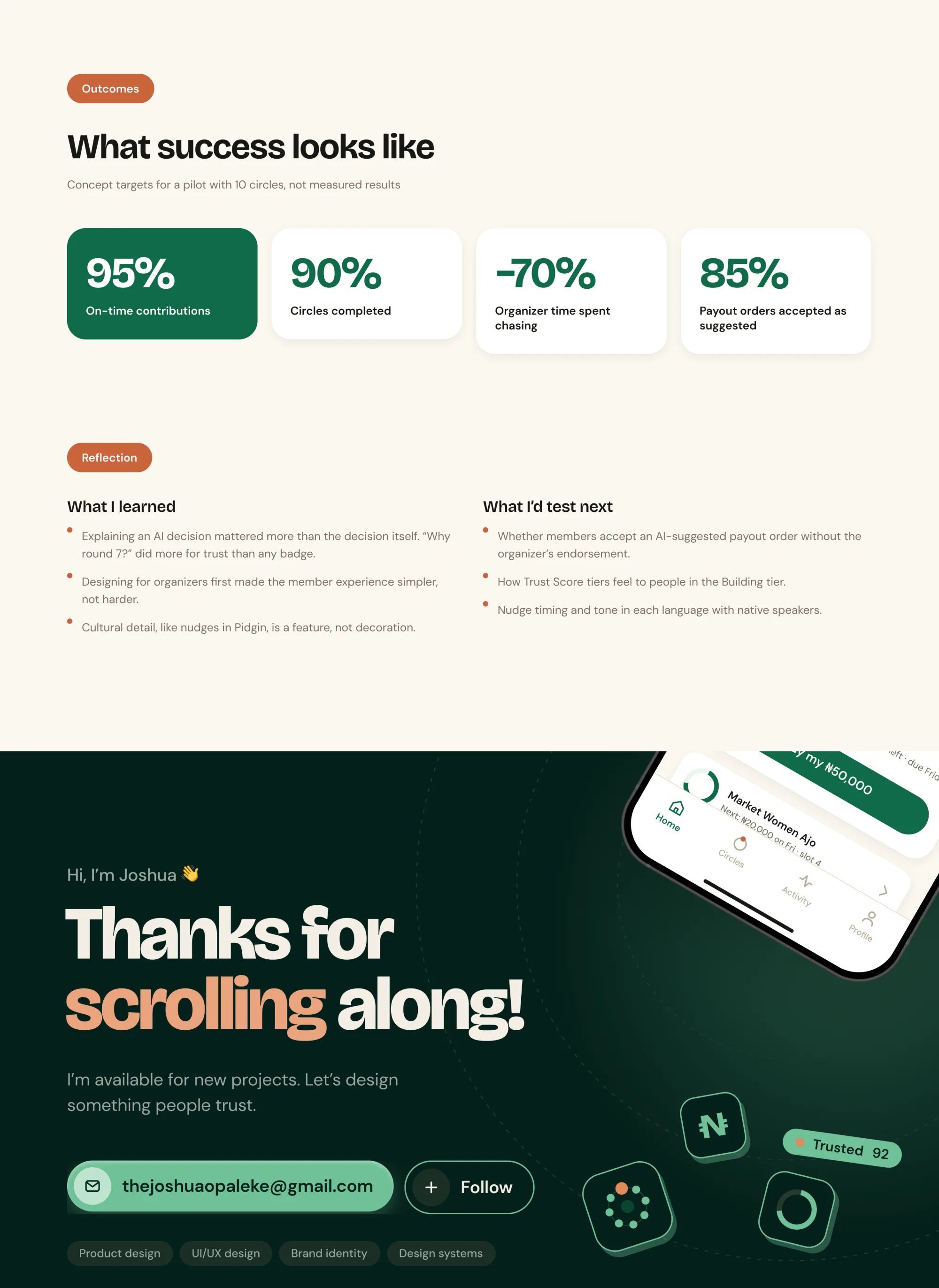
Kolo is a concept, so nothing here is a measured result. I set targets for a pilot with 10 circles: 95% on-time contributions, 90% of circles completed, 70% less organizer time spent chasing, and 85% of payout orders accepted as suggested.
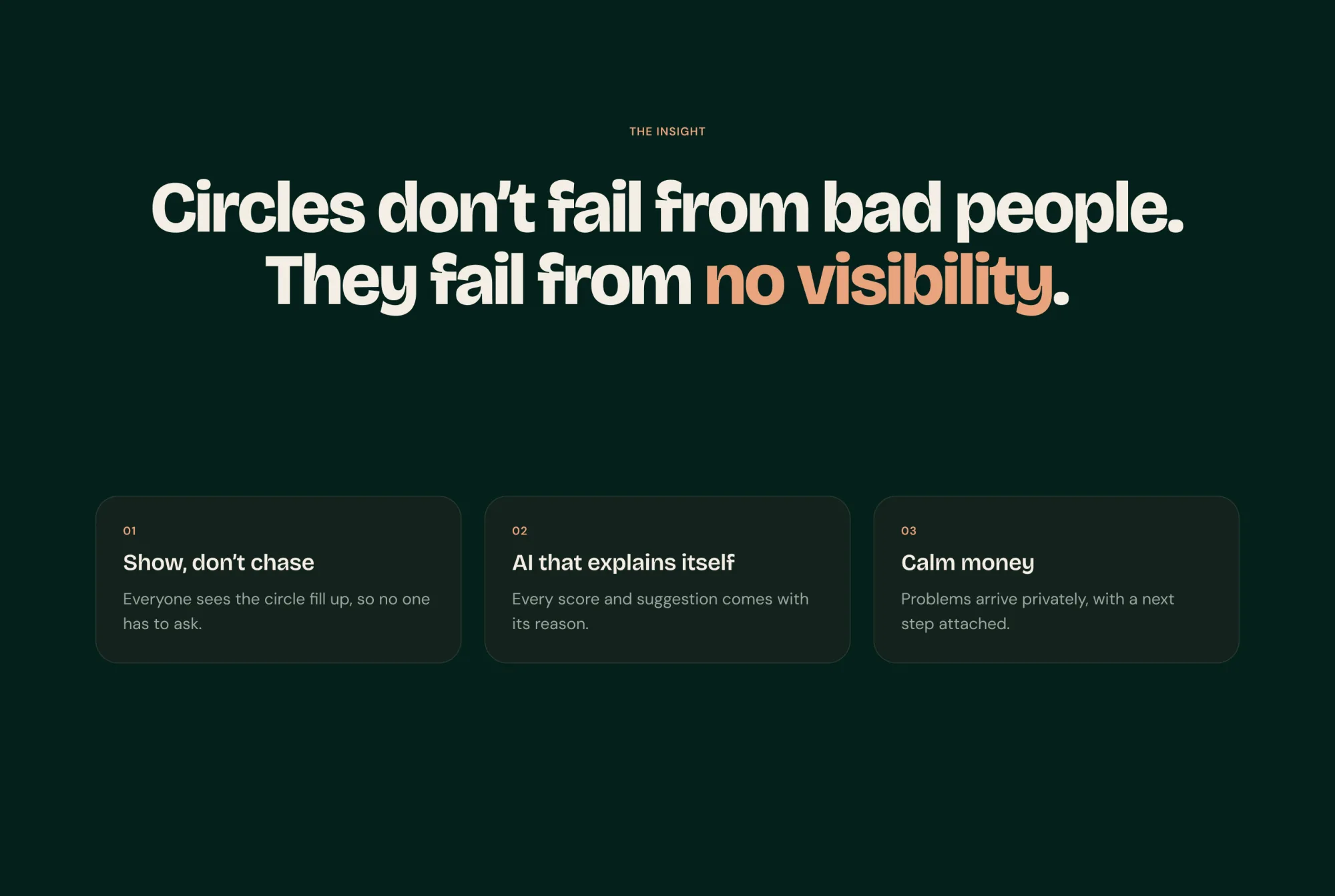
Circles don't fail from bad people. They fail from no visibility.
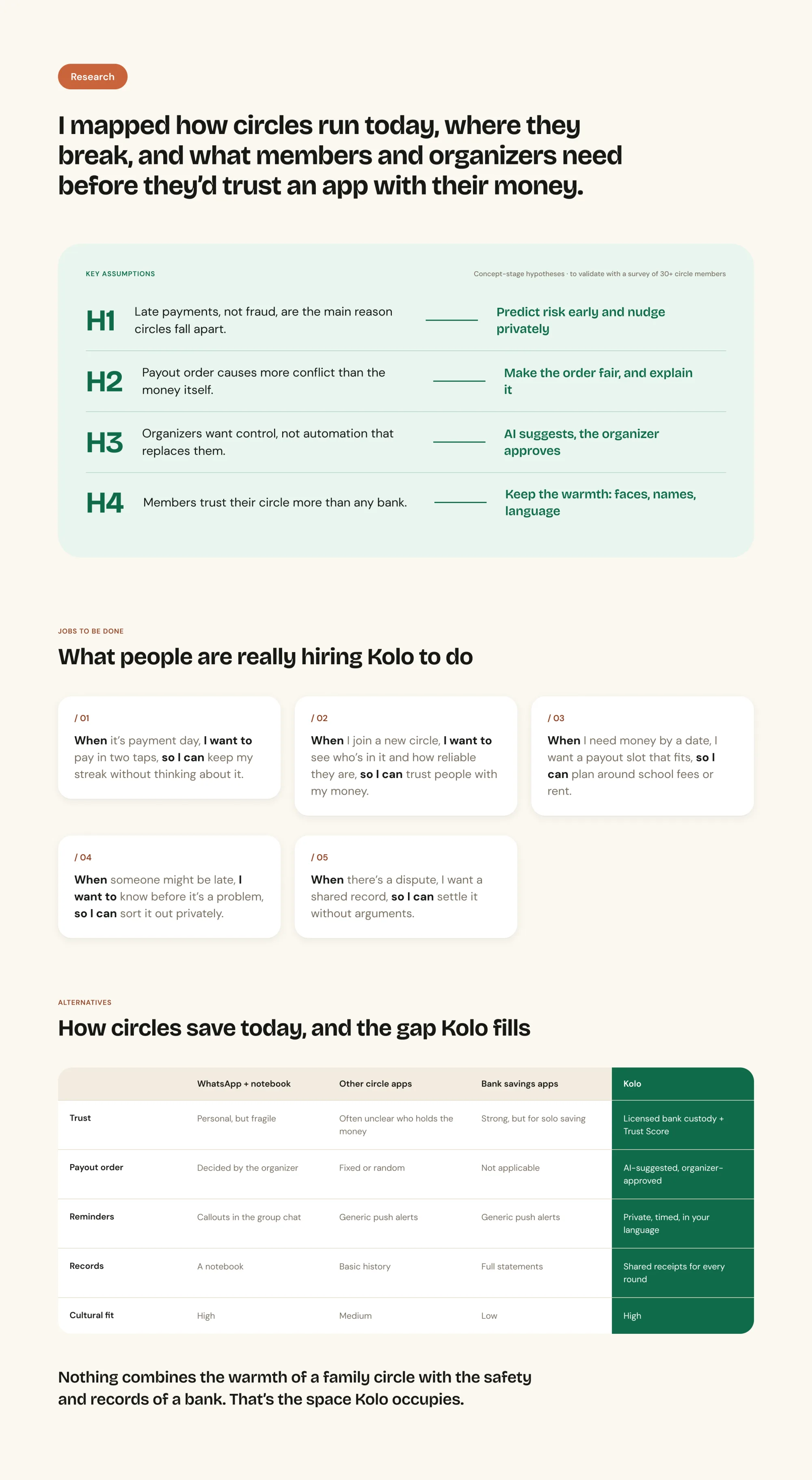
01Starting assumptions
I began with four hypotheses, to be validated with a survey of 30 or more circle members. Late payments, not fraud, are the main reason circles fall apart. Payout order causes more conflict than the money itself. Organizers want control, not automation that replaces them. And members trust their circle more than any bank.
Each one set a design response: predict risk early and nudge privately, make the order fair and explain it, let the AI suggest while the organizer approves, and keep the warmth of faces, names and language.
02Three principles
Show, don't chase: everyone sees the circle fill up, so no one has to ask. AI that explains itself: every score and suggestion comes with its reason. Calm money: problems arrive privately, with a next step attached.
03AI people can trust with their money
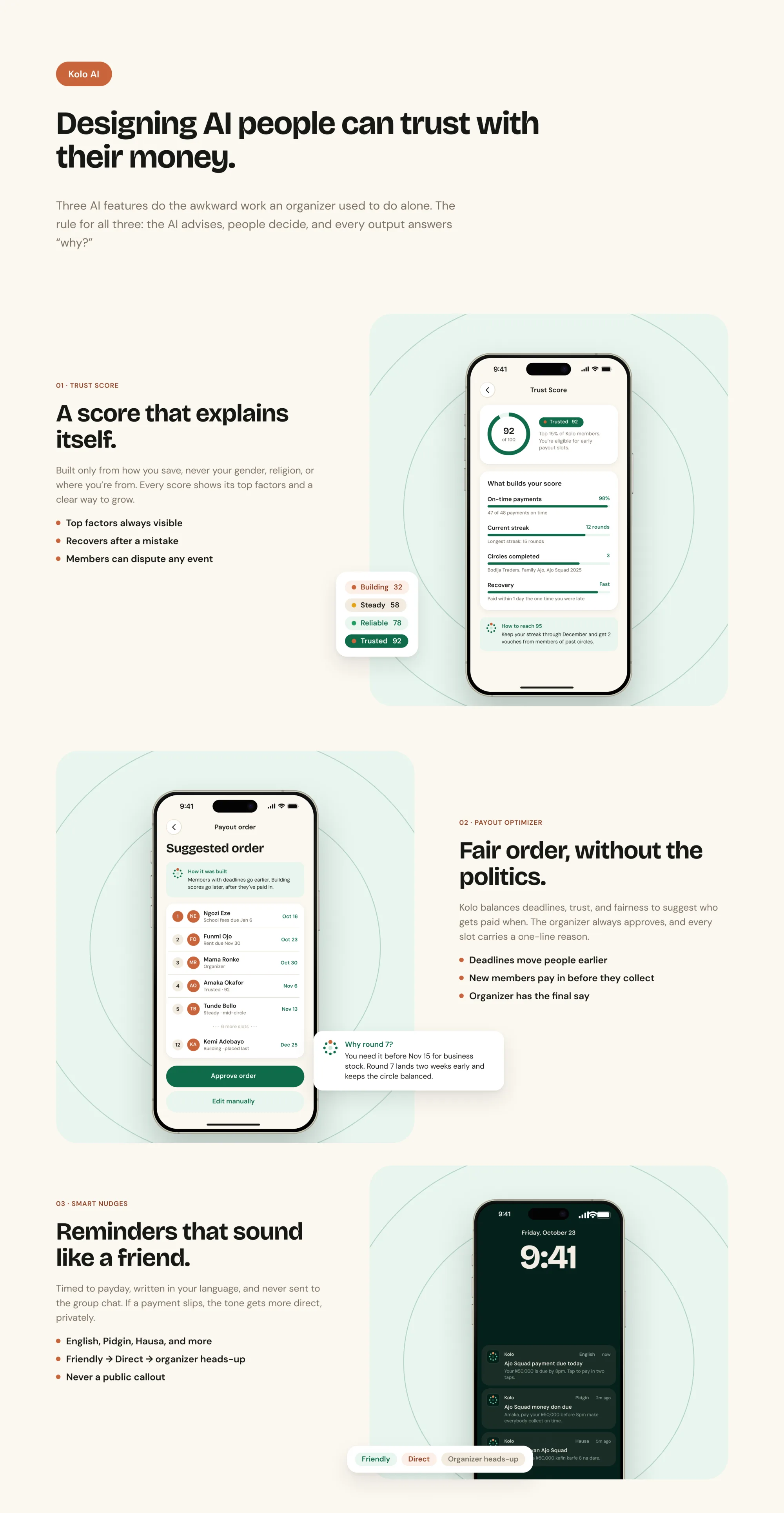
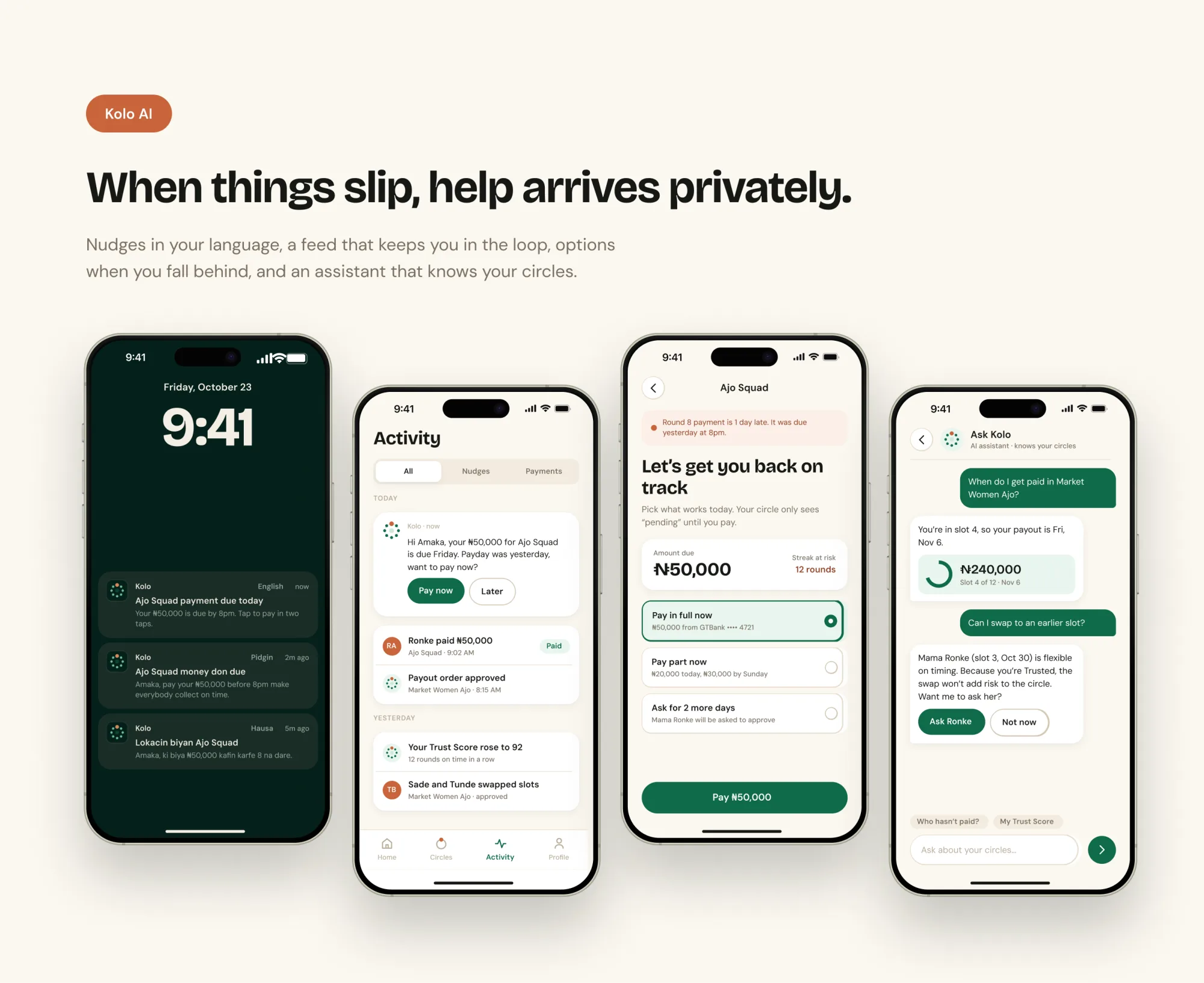
The AI does the work an organizer used to do alone: scoring reliability, suggesting a payout order and nudging members before a payment is late.
The Trust Score is built only from how you save, never your gender, religion or where you're from. Every score shows its top factors and a clear way to grow.
04What I learned
Explaining an AI decision mattered more than the decision itself. "Why round 7?" did more for trust than any badge. Designing for organizers first made the member experience simpler, not harder. And cultural detail, like nudges in Pidgin, is a feature, not decoration.
Next I would test whether members accept an AI-suggested payout order without the organizer's endorsement, how Trust Score tiers feel to people in the Building tier, and nudge timing and tone in each language with native speakers.
Motion (03)
Case study boards (16)